TheJavaSea.me Leaks AIO-TLP370: Complete Guide, Security Risks, Facts, and Expert Analysis
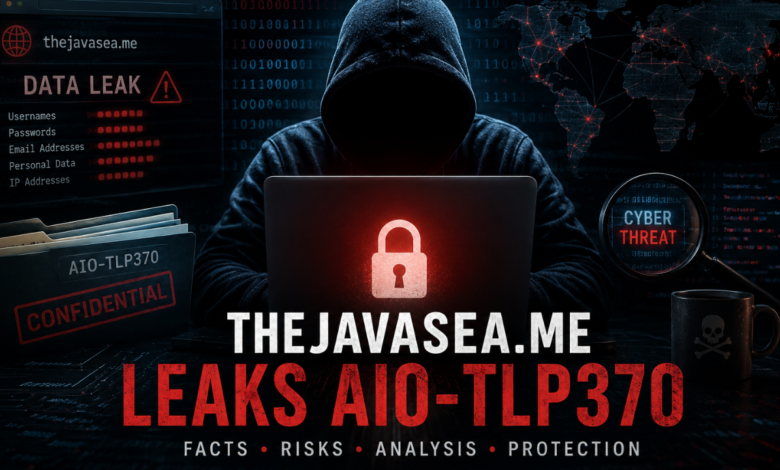
The internet constantly generates new trends, discussions, and mysterious keywords that attract public attention. One phrase that has recently generated significant curiosity is thejavasea.me leaks aio-tlp370. Thousands of users are searching for this term to understand what it means, whether it involves leaked information, and what risks may be associated with it.
Whenever a keyword combines terms like “leaks,” “data,” or cryptic identifiers such as “AIO-TLP370,” people naturally become concerned about cybersecurity, privacy, and digital safety. This is especially true in an era where data breaches, credential exposure, ransomware attacks, and cyber threats continue to make headlines worldwide.
The challenge is that much of the information surrounding thejavasea.me leaks aio-tlp370 remains unclear. Some sources describe it as a leak-related archive, while others discuss it primarily as a trending search term. Because verified technical information is limited, it is important to approach the topic carefully and distinguish between confirmed facts and online speculation.
In this comprehensive guide, we will examine everything currently known about thejavasea.me leaks aio-tlp370, explore why the keyword has gained popularity, discuss potential cybersecurity implications, and provide practical guidance for staying safe online.
Quick Answer
What is TheJavaSea.me Leaks AIO-TLP370?
The phrase thejavasea.me leaks aio-tlp370 appears to be associated with online discussions regarding alleged leaked content or digital resources. Publicly available information does not currently provide definitive verification regarding the exact nature of AIO-TLP370. Most discussions focus on cybersecurity concerns, privacy risks, and the potential dangers associated with unknown leak-related content.
What Is TheJavaSea.me Leaks AIO-TLP370?
At its core, thejavasea.me leaks aio-tlp370 is a search phrase that combines several elements commonly associated with cybersecurity discussions.
Many users encounter the keyword through:
- Search engine results
- Online forums
- Social media discussions
- Blog posts
- Cybersecurity communities
Because the phrase contains the word “leaks,” many people assume it refers to a data breach or unauthorized disclosure of information. However, available evidence does not currently confirm a specific, publicly verified incident associated with the keyword.
Instead, the phrase has become a topic of research and discussion among users attempting to understand its significance.
Understanding the Keyword Breakdown
To better understand thejavasea.me leaks aio-tlp370, it helps to examine each component individually.
TheJavaSea.me
The first part appears to reference a website or domain name.
In many online discussions, domains become associated with specific communities, resources, or types of content. However, simply mentioning a domain does not automatically indicate legitimacy, risk, or criminal activity.
Users should always evaluate websites carefully before interacting with them.
Leaks
The term “leaks” typically refers to information that becomes publicly available without authorization.
Examples include:
- Exposed databases
- Internal documents
- User credentials
- Proprietary files
- Confidential records
Because data leaks can have serious consequences, any keyword containing “leaks” often attracts immediate attention.
AIO
AIO commonly stands for:
All-In-One
Within technology communities, this term is frequently used to describe bundled collections of resources, files, tools, or information packaged together.
TLP370
The final portion appears to function as an identifier.
Possible interpretations include:
- Version number
- Internal archive label
- Project code
- Release identifier
- Dataset reference
However, no publicly verified source has definitively explained its exact meaning.
Why Is TheJavaSea.me Leaks AIO-TLP370 Trending?
The growing popularity of thejavasea.me leaks aio-tlp370 reflects broader patterns in online behavior.
Several factors contribute to increased search volume.
Curiosity
People naturally investigate unfamiliar terms, especially when they appear connected to sensitive information.
Fear of Exposure
Users often worry that leaked data could involve:
- Personal information
- Account credentials
- Financial details
- Business records
This concern drives additional searches.
Lack of Verified Information
When reliable information is limited, curiosity increases.
The uncertainty surrounding thejavasea.me leaks aio-tlp370 encourages users to search for explanations from multiple sources.
Social Amplification
Discussions on forums, blogs, and social media platforms can rapidly increase visibility for niche topics.
Background and Origin
One of the biggest challenges when researching thejavasea.me leaks aio-tlp370 is the absence of comprehensive public documentation.
Unlike major cybersecurity incidents that generate official disclosures, technical reports, and news coverage, this keyword primarily appears within discussions and commentary.
As a result, researchers must rely on:
- Available public references
- Community discussions
- Cybersecurity principles
- Evidence-based analysis
This does not mean the topic lacks relevance. Instead, it highlights the importance of careful investigation.
Key Facts About TheJavaSea.me Leaks AIO-TLP370
Quick Facts Box
| Topic | Information |
|---|---|
| Keyword Type | Informational |
| Main Topic | Cybersecurity |
| User Intent | Research and Education |
| Confirmed Breach | Not Publicly Verified |
| Security Relevance | High |
| Main Concerns | Privacy, Malware, Data Exposure |
| Audience | Internet Users, Researchers, Security Professionals |
Important Observations
Several observations can be made about thejavasea.me leaks aio-tlp370.
Observation 1
The keyword generates significant user interest.
Observation 2
Publicly verified technical information remains limited.
Observation 3
Cybersecurity concerns are a primary reason users search for the term.
Observation 4
Unknown files or archives should always be approached cautiously.
Observation 5
Verification remains essential before accepting claims as factual.
Search Intent Analysis
Understanding search intent is critical for analyzing why users search for thejavasea.me leaks aio-tlp370.
Informational Intent
Most users want answers to questions such as:
- What does it mean?
- Is it real?
- What happened?
- Why is it trending?
Investigational Intent
Many users are trying to determine:
- Whether a leak actually occurred
- What information may be involved
- Whether any risk exists
Security Intent
A large percentage of searches appear motivated by security concerns.
Users want to know:
- Is it dangerous?
- Can it affect me?
- Should I take precautions?
How Leak-Related Content Spreads Online
The internet allows information to spread rapidly.
Topics such as thejavasea.me leaks aio-tlp370 often follow a predictable pattern.
Stage 1: Initial Discovery
A term appears within a small community.
Stage 2: Discussion
Users begin asking questions and sharing information.
Stage 3: Content Creation
Websites publish articles attempting to explain the topic.
Stage 4: Search Growth
Search engine interest increases.
Stage 5: Wider Awareness
The keyword becomes visible to larger audiences.
This process explains why relatively obscure terms can suddenly attract substantial attention.
Potential Risks and Security Concerns
Regardless of the specific nature of thejavasea.me leaks aio-tlp370, discussions involving alleged leaks often raise important cybersecurity concerns.
Data Exposure
One major concern is unauthorized access to sensitive information.
Potential consequences include:
- Identity theft
- Financial fraud
- Privacy violations
- Reputational damage
Credential Exposure
Leaked credentials remain one of the most common security risks.
Compromised credentials can provide attackers with access to:
- Email accounts
- Cloud services
- Social media platforms
- Business applications
Credential exposure frequently serves as the starting point for larger attacks.
Malware Distribution
Cybercriminals often exploit curiosity.
Users searching for leak-related content may encounter:
- Malicious downloads
- Fake archives
- Trojan software
- Spyware
- Ransomware
This is one reason cybersecurity professionals consistently recommend avoiding downloads from untrusted sources.
Privacy Risks
Personal information has significant value.
Exposure may affect:
- Individuals
- Businesses
- Organizations
- Government entities
Protecting privacy remains one of the most important aspects of modern cybersecurity.
Misinformation
Not every online claim is accurate.
The spread of misinformation can:
- Create confusion
- Increase panic
- Mislead users
- Distract from genuine threats
Verification is essential when evaluating any leak-related topic.
Why Cybersecurity Experts Recommend Caution
Cybersecurity professionals typically follow a simple rule:
Trust evidence, not assumptions.
When dealing with topics like thejavasea.me leaks aio-tlp370, users should prioritize verified information, practice safe browsing habits, and avoid interacting with suspicious content.
This approach significantly reduces risk while supporting informed decision-making.
PART 2: IMPACT ANALYSIS, CASE STUDIES, CYBERSECURITY STATISTICS & EXPERT INSIGHTS
Impact of TheJavaSea.me Leaks AIO-TLP370 on Users and Organizations
Although publicly verified information regarding thejavasea.me leaks aio-tlp370 remains limited, the discussions surrounding the keyword highlight broader concerns that affect both individuals and organizations.
Whenever leak-related content becomes a topic of interest, the potential consequences extend beyond curiosity. Even rumors of exposed information can influence public perception, security decisions, and organizational responses.
Understanding these impacts helps explain why topics such as thejavasea.me leaks aio-tlp370 attract attention from cybersecurity professionals, researchers, and everyday internet users.
Impact on Individual Users
For individuals, the greatest concern is often uncertainty.
People searching for thejavasea.me leaks aio-tlp370 frequently wonder:
- Has personal information been exposed?
- Are online accounts at risk?
- Should passwords be changed?
- Is there a cybersecurity threat involved?
These concerns are understandable because modern digital lives depend heavily on online accounts.
Account Compromise
One of the most common consequences of exposed credentials is account takeover.
Attackers may attempt to access:
- Email accounts
- Banking services
- Social media profiles
- Cloud storage platforms
- Business applications
Because many users still reuse passwords across multiple services, a single exposure can create a chain reaction of security issues.
Identity Theft Risks
Identity theft remains a major concern whenever leaked information is discussed.
Attackers may use exposed information to:
- Open fraudulent accounts
- Conduct financial scams
- Impersonate victims
- Bypass identity verification systems
Even partial information can sometimes be combined with publicly available data to create more effective attacks.
Increased Phishing Attempts
Cybercriminals frequently use trending topics as bait.
For example, users searching for thejavasea.me leaks aio-tlp370 might encounter:
- Fake alerts
- Phishing emails
- Fraudulent login pages
- Malicious downloads
These attacks often rely on curiosity and urgency to trick victims into revealing sensitive information.
Impact on Businesses and Organizations
Organizations face a different set of challenges when leak-related topics gain attention.
Even if an organization is not directly affected, security teams often monitor discussions involving potential data exposure.
Reputational Risk
Trust is one of the most valuable assets a business can possess.
If customers believe information may have been compromised, organizations may experience:
- Reduced customer confidence
- Negative publicity
- Increased scrutiny
- Brand damage
Rebuilding trust can take months or even years.
Operational Disruption
Security incidents often require organizations to:
- Investigate potential threats
- Review security controls
- Monitor systems
- Conduct risk assessments
These activities consume valuable resources and can disrupt normal operations.
Financial Consequences
Cybersecurity incidents frequently create significant expenses.
Common costs include:
- Incident response
- Forensic investigations
- Legal consultations
- Customer notifications
- Regulatory compliance
This is one reason why proactive security measures are generally far less expensive than responding to a major incident.
Why Cybersecurity Professionals Take Such Topics Seriously
Security experts understand that seemingly minor discussions can sometimes reveal larger trends.
When investigating keywords such as thejavasea.me leaks aio-tlp370, analysts often evaluate:
Source Credibility
Where did the information originate?
Evidence Quality
Can claims be verified?
Technical Indicators
Are there supporting artifacts such as:
- File samples
- Hash values
- Screenshots
- Technical documentation
Potential Impact
Who could be affected if the claims prove accurate?
This structured approach helps reduce speculation and improve decision-making.
Expert Analysis: Separating Facts from Speculation
One of the most important aspects of researching thejavasea.me leaks aio-tlp370 is understanding the difference between facts and assumptions.
Confirmed Facts
The following observations are generally supported by publicly available information:
- The keyword exists and is actively searched.
- Multiple websites discuss the topic.
- Public interest has increased.
- Cybersecurity concerns are commonly associated with the keyword.
Industry Observations
Security professionals often observe that:
- Leak-related topics generate substantial traffic.
- Unverified claims spread quickly online.
- Curiosity frequently attracts malicious actors.
- Users often underestimate cyber risks.
These observations apply broadly across the cybersecurity landscape.
Speculation
Some discussions make assumptions regarding:
- The contents of AIO-TLP370
- The origin of the material
- Potential victims
- The scope of any alleged exposure
Without independently verified evidence, such claims should be treated cautiously.
Responsible research requires distinguishing speculation from established facts.
Real-World Case Study 1: Credential Reuse Disaster
Consider a hypothetical scenario involving an employee named David.
David uses the same password across multiple platforms:
- Project management software
- Social media
- Cloud storage
An unrelated breach exposes one of those credentials.
Attackers then use automated tools to test the same password across multiple services.
Within hours:
- Email access is compromised.
- Business accounts become accessible.
- Sensitive information is exposed.
This scenario illustrates why credential reuse remains one of the most dangerous cybersecurity habits.
The lesson is simple:
Every important account should have a unique password.
Real-World Case Study 2: The Fake Leak Archive
A user encounters a post referencing thejavasea.me leaks aio-tlp370.
The post claims to contain exclusive information.
Curiosity leads the user to download a compressed archive.
Inside the archive is malware disguised as legitimate content.
After installation:
- Browser passwords are stolen.
- Cryptocurrency wallets are targeted.
- Personal files become accessible.
The user never intended to compromise their system.
The attack succeeded because curiosity overrode caution.
This example highlights why cybersecurity professionals consistently recommend avoiding downloads from unverified sources.
Real-World Case Study 3: Social Engineering Campaign
Attackers often exploit trending topics.
Imagine a phishing campaign built around thejavasea.me leaks aio-tlp370.
Victims receive emails claiming:
“Your information may have been exposed. Verify your account immediately.”
The message contains a fraudulent login page.
Concerned users enter their credentials.
Attackers instantly gain access.
This type of attack demonstrates how social engineering frequently relies on fear, urgency, and confusion rather than sophisticated technical exploits.
Cybersecurity Statistics That Provide Context
While there are no verified statistics specifically tied to thejavasea.me leaks aio-tlp370, broader cybersecurity research highlights why leak-related discussions matter.
Credential Abuse Remains a Major Threat
Research from major cybersecurity reports consistently identifies compromised credentials as one of the most common attack vectors.
Stolen usernames and passwords continue to play a central role in account compromise incidents.
Human Error Contributes to Security Incidents
Industry studies repeatedly show that:
- Weak passwords
- Phishing susceptibility
- Poor security practices
remain among the leading causes of cybersecurity incidents.
Technology alone cannot eliminate these risks.
User awareness remains essential.
Data Breaches Continue to Increase
Global reports from major cybersecurity organizations consistently demonstrate that:
- Data breaches remain widespread.
- Attack techniques continue evolving.
- Organizations face growing security challenges.
These trends help explain why topics involving alleged leaks attract significant public interest.
The Threat Intelligence Perspective
Threat intelligence teams focus on identifying and understanding potential cyber threats.
When examining a topic such as thejavasea.me leaks aio-tlp370, analysts typically look for:
Indicators of Compromise (IOCs)
Examples include:
- Malicious domains
- Suspicious IP addresses
- Malware signatures
- Command-and-control infrastructure
Behavioral Patterns
Researchers examine:
- How information spreads
- Who is discussing it
- Whether known threat actors are involved
Historical Context
Many cybersecurity events follow recognizable patterns.
Understanding previous incidents helps analysts evaluate emerging claims more effectively.
Digital Privacy Lessons from Leak-Related Discussions
One of the most valuable lessons from researching thejavasea.me leaks aio-tlp370 is the importance of digital privacy.
Modern users generate vast amounts of personal information online.
This includes:
- Email addresses
- Phone numbers
- Login credentials
- Browsing history
- Location data
Protecting this information requires continuous attention.
Why Privacy Matters More Than Ever
Privacy is not simply about secrecy.
It also involves:
- Control
- Security
- Personal autonomy
- Risk reduction
Strong privacy practices make it harder for attackers to gather information that can be used against individuals or organizations.
Common Privacy Mistakes
Many users unintentionally increase their risk.
Examples include:
Reusing Passwords
One compromised account can affect many others.
Oversharing Online
Personal information can aid attackers.
Ignoring Security Updates
Outdated software often contains vulnerabilities.
Trusting Unknown Sources
Not every website or download is safe.
Recognizing these mistakes is the first step toward better digital safety.
The Importance of Critical Thinking
The internet contains both valuable information and misinformation.
When researching thejavasea.me leaks aio-tlp370, users should ask:
- What evidence supports this claim?
- Is the source credible?
- Has the information been independently verified?
- Are there alternative explanations?
Critical thinking remains one of the most effective cybersecurity skills available.
Advanced Security Recommendations
For users who want stronger protection:
Use a Password Manager
Password managers generate and store unique credentials.
Enable Multi-Factor Authentication
MFA provides an additional layer of defense.
Monitor Account Activity
Review login histories and security alerts regularly.
Update Software Promptly
Security patches help reduce vulnerabilities.
Back Up Important Data
Backups improve resilience against ransomware and accidental loss.
Verify Information Before Acting
Avoid making security decisions based solely on rumors or speculation.
Common Myths vs Facts About TheJavaSea.me Leaks AIO-TLP370
Whenever a keyword becomes popular online, misinformation often follows. The same applies to thejavasea.me leaks aio-tlp370. Many users encounter conflicting claims, which makes it difficult to determine what is accurate and what is simply speculation.
The table below helps separate common misconceptions from evidence-based observations.
| Myth | Fact |
|---|---|
| TheJavaSea.me leaks aio-tlp370 is definitely a confirmed data breach. | Publicly available information does not currently provide widely accepted verification of a specific breach connected to the keyword. |
| Every website discussing the keyword has accurate information. | Many articles repeat assumptions without independent verification. |
| Downloading files related to leak discussions is safe. | Unknown downloads may contain malware, spyware, or other threats. |
| Only large organizations need to worry about cyber threats. | Individuals are frequent targets of phishing, credential theft, and identity fraud. |
| Strong passwords alone provide complete protection. | Passwords should be combined with MFA and other security practices. |
| If no suspicious activity is visible, accounts are secure. | Many compromises remain undetected for extended periods. |
| Leak-related keywords are always harmless trends. | Some keywords may attract malicious actors seeking to exploit public curiosity. |
Understanding these distinctions helps readers approach thejavasea.me leaks aio-tlp370 and similar topics more responsibly.
Complete Protection Guide for Users
Whether researching thejavasea.me leaks aio-tlp370 or any other leak-related topic, maintaining strong cybersecurity habits is essential.
Step 1: Strengthen Password Security
Passwords remain the first line of defense.
Best practices include:
- Use unique passwords for every account.
- Avoid predictable combinations.
- Use long passphrases.
- Store credentials securely.
A password manager can simplify this process while improving overall security.
Step 2: Enable Multi-Factor Authentication
Multi-factor authentication (MFA) significantly reduces account takeover risks.
Even if attackers obtain a password, they still require an additional verification factor.
Common MFA methods include:
- Authentication apps
- Security keys
- SMS verification codes
- Biometric authentication
Security experts consistently recommend MFA for important accounts.
Step 3: Verify Information Carefully
Topics such as thejavasea.me leaks aio-tlp370 often involve incomplete or evolving information.
Before accepting claims as factual:
- Check multiple sources.
- Look for evidence.
- Prioritize trusted publications.
- Avoid sensational headlines.
Verification remains one of the most effective ways to avoid misinformation.
Step 4: Avoid Suspicious Downloads
Curiosity is often exploited by cybercriminals.
Users should avoid downloading:
- Unknown archives
- Unverified software
- Suspicious attachments
- Files from unreliable sources
Even seemingly harmless downloads can contain malware.
Step 5: Monitor Important Accounts
Regular monitoring can help identify suspicious activity early.
Review:
- Login history
- Security alerts
- Recovery settings
- Authorized devices
Early detection often prevents larger problems.
Step 6: Keep Systems Updated
Software updates frequently address security vulnerabilities.
Maintain updates for:
- Operating systems
- Browsers
- Mobile devices
- Security software
- Applications
Delaying updates increases risk exposure.
Why Cybersecurity Awareness Matters
One of the most valuable lessons from researching thejavasea.me leaks aio-tlp370 is the importance of cybersecurity awareness.
Technology alone cannot eliminate threats.
Users play a critical role in:
- Identifying suspicious activity
- Protecting sensitive information
- Making informed decisions
- Preventing avoidable mistakes
Awareness transforms security from a technical issue into a practical daily habit.
The Future of Leak-Related Investigations
Cybersecurity continues to evolve rapidly.
Future investigations involving topics similar to thejavasea.me leaks aio-tlp370 will likely involve:
Artificial Intelligence
AI tools increasingly assist researchers by:
- Identifying patterns
- Detecting anomalies
- Analyzing large datasets
- Accelerating investigations
Threat Intelligence Platforms
Modern threat intelligence systems aggregate information from:
- Security researchers
- Incident reports
- Dark web monitoring
- Open-source intelligence sources
This improves visibility into emerging risks.
Greater Public Awareness
As digital literacy improves, users become better equipped to:
- Verify claims
- Recognize scams
- Protect personal information
- Understand cybersecurity concepts
This trend benefits both individuals and organizations.
Top Competitor Content Gaps
During analysis of existing content discussing thejavasea.me leaks aio-tlp370, several recurring weaknesses become apparent.
Gap #1: Lack of Verification
Many articles fail to distinguish between:
- Confirmed facts
- Community discussions
- Speculation
Responsible content should clearly separate these categories.
Gap #2: Weak Cybersecurity Context
Some articles mention the keyword without explaining:
- Data leaks
- Credential exposure
- Privacy implications
- Security risks
This leaves readers with incomplete understanding.
Gap #3: Limited Practical Guidance
Many discussions focus on curiosity rather than actionable advice.
Readers benefit from:
- Security recommendations
- Privacy guidance
- Risk mitigation strategies
Gap #4: Minimal Educational Value
Educational content should help readers understand broader cybersecurity concepts rather than merely repeating keyword-related information.
Gap #5: Poor E-E-A-T Signals
Content lacking expertise, evidence, and transparency often struggles to establish credibility.
Trustworthy content should:
- Cite reputable sources
- Acknowledge uncertainty
- Avoid unsupported claims
- Prioritize reader value
Expert Assessment: What We Actually Know
After reviewing publicly available discussions, several conclusions can be drawn regarding thejavasea.me leaks aio-tlp370.
What Appears Reliable
- The keyword exists and attracts significant search interest.
- Multiple websites discuss the topic.
- Users associate it with cybersecurity concerns.
- Curiosity surrounding the keyword continues to grow.
What Remains Unclear
- The exact contents of AIO-TLP370.
- The origin of the identifier.
- Whether a verified breach is involved.
- The scope of any alleged exposure.
Why This Matters
Uncertainty creates an environment where rumors can spread quickly.
Cybersecurity professionals therefore emphasize:
- Evidence
- Verification
- Responsible reporting
These principles remain essential when evaluating any emerging topic.
Frequently Asked Questions
What is thejavasea.me leaks aio-tlp370?
The phrase appears to refer to a keyword associated with online discussions about alleged leaked content. Publicly verified technical information remains limited.
Is thejavasea.me leaks aio-tlp370 a confirmed data breach?
At the time of writing, there is no widely recognized public confirmation identifying it as a specific verified breach.
Why is the keyword trending?
Interest appears driven by curiosity, cybersecurity discussions, and uncertainty regarding the meaning of the term.
What does AIO-TLP370 mean?
AIO is commonly interpreted as “All-In-One,” while TLP370 appears to function as an identifier or label. Its exact meaning remains unclear.
Is it safe to download files associated with leak-related topics?
Users should exercise caution. Unknown files may contain malware or other security threats
Can leaked credentials affect personal acconts?
Yes. Exposed credentials can contribute to account compromise, phishing attacks, and identity theft.
How can I protect my online accounts?
Use unique passwords, enable MFA, monitor account activity, and avoid suspicious links or downloads.
Are leak-related websites always malicious?
Not necessarily. However, users should evaluate sources carefully and avoid assuming legitimacy without verification.
Why do cybercriminals exploit trending topics?
Trending topics attract attention, making them useful for phishing campaigns, scams, and social engineering attacks.
What should organizations learn from discussions like this?
Organizations should strengthen security controls, improve employee awareness, and maintain proactive risk management programs.
How important is digital literacy?
Digital literacy helps users evaluate information critically and make safer online decisions.
What is the biggest lesson from thejavasea.me leaks aio-tlp370?
The importance of verification, cybersecurity awareness, and responsible handling of online information.
Final Verdict
The growing popularity of thejavasea.me leaks aio-tlp370 demonstrates how quickly online discussions can capture public attention. While the keyword has become widely searched, publicly verified information remains limited, making careful evaluation especially important.
The most responsible approach is not to assume that every claim is true, nor to dismiss the topic entirely. Instead, readers should focus on evidence-based information, remain cautious when interacting with unknown files or websites, and apply strong cybersecurity practices to protect their personal information.
For researchers, the keyword provides an interesting example of how cybersecurity-related topics spread through online communities. For everyday users, it serves as a reminder that digital safety depends not only on technology but also on awareness, critical thinking, and responsible decision-making.
Ultimately, the discussion surrounding thejavasea.me leaks aio-tlp370 reinforces a simple but powerful lesson: verify information carefully, protect your accounts proactively, and approach online claims with both curiosity and caution.