Upgrade Oxzep7 Python: Complete 2026 Guide for Secure, Scalable & Modern Python Environments
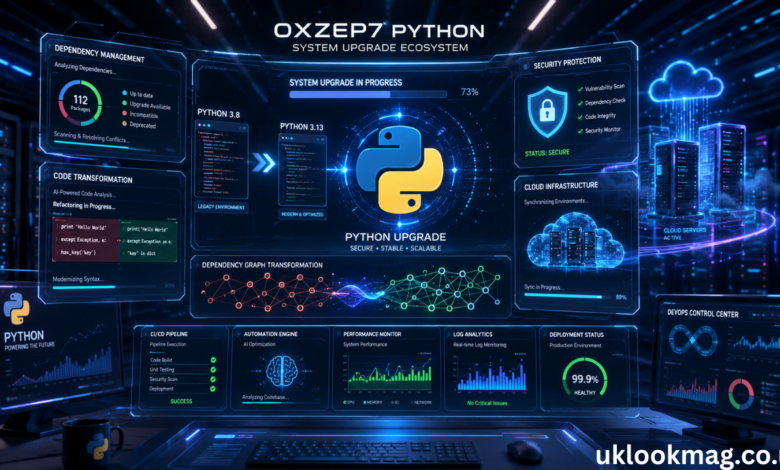
In recent times, there have been a lot of inquiries and mentions about upgrade oxzep7 python in forums, developer manuals, and other sources. Nevertheless, in most cases, it refers to neither the official Python framework nor any standard Python library or tool.
As a rule, it describes a routine operation of Python environment upgrade in custom or special systems, in which case “Oxzep7” seems to be the name of some internal runtime or configuration environment developed upon Python.
Due to this ambiguity, when people look for answers to their questions related to upgrade oxzep7 python, they actually need help with solving practical problems, including:
- Python version upgrade
- Dependency management
- Compatibility troubleshooting
- System optimization and security improvement
- Porting of legacy Python codebase
Here you will find a detailed and clear guidance on how to properly upgrade your systems built upon Python without losing stability and performance.
Understanding “Upgrade Oxzep7 Python” in Real Context
Although the term upgrade oxzep7 python is not an official Python command or library, it typically refers to a multi-layer upgrade process involving:
- Python interpreter version upgrade
- Dependency and package updates
- Refactoring custom modules
- Environment reconfiguration
- Security and performance improvements
In real-world development, this aligns with standard practices used in enterprise Python systems powered by:
- Python programming language
- pip package manager
- virtual environments (venv, virtualenv)
- CI/CD pipelines
- containerized deployment systems (Docker)
So rather than being a single tool, upgrade oxzep7 python represents a full system modernization workflow.
Why Upgrading Python Systems Is Critical in 2026
Modern software environments evolve rapidly. Delaying upgrades leads to hidden technical debt that affects security, performance, and maintainability.
Security Risks of Outdated Python Systems
Older Python versions eventually stop receiving security patches. This creates vulnerabilities such as:
- Unpatched CVEs in standard libraries
- Weak cryptographic implementations
- Unsupported third-party dependencies
According to industry security practices, outdated runtimes are among the most common attack vectors in enterprise systems.
Performance Improvements in Modern Python Versions
Each new Python release introduces optimizations that improve:
- Memory management efficiency
- Execution speed of core operations
- Async and concurrency handling
- Garbage collection performance
For large-scale systems, upgrading Python can significantly reduce resource consumption.
Compatibility With Modern Libraries
Many widely used libraries gradually drop support for older Python versions, including:
- Data science tools (NumPy, Pandas)
- Web frameworks (Django, FastAPI)
- AI/ML frameworks (TensorFlow, PyTorch)
Without upgrading, systems risk becoming incompatible with modern development tools.
Pre-Upgrade Strategy for Python Environments
A structured preparation phase is essential before performing any upgrade similar to upgrade oxzep7 python workflows.
1. Environment Audit
Start by documenting:
- Current Python version
- Installed dependencies (
pip freeze) - System-level libraries
- Configuration files
- Environment variables
This creates a full snapshot of your system.
2. Dependency Analysis
Check outdated or conflicting packages using:
- pip list –outdated
- pipdeptree
This helps identify hidden compatibility risks before upgrading.
3. Full System Backup
Always back up:
- Source code repositories
- Databases
- Configuration files
- Virtual environments
This ensures rollback capability if issues occur.
4. Staging Environment Setup
Never upgrade directly in production.
Instead:
- Create a staging replica
- Mirror production configuration
- Run pre-upgrade tests
This reduces operational risk significantly.
Step-by-Step Python Upgrade Process (Oxzep7 Equivalent)
This section represents the practical implementation of an upgrade oxzep7 python workflow.
Step 1: Install New Python Version
Install a stable version such as Python 3.12 or 3.13 using official sources or version managers like pyenv.
Step 2: Create Clean Virtual Environment
Always create a fresh environment:
python -m venv new_env
Activate it and avoid reusing old environments to prevent dependency conflicts.
Step 3: Reinstall Dependencies
Install packages using a controlled approach:
pip install -r requirements.txt
Fix broken or outdated packages individually instead of forcing incompatible versions.
Step 4: Update Custom Modules
Review project-specific code and:
- Replace deprecated syntax
- Fix import changes
- Update async patterns
- Refactor outdated logic
Step 5: Run Full Testing Suite
Execute:
- Unit tests
- Integration tests
- Performance benchmarks
No production deployment should proceed without full validation.
Common Issues During Python Upgrades
Dependency Conflicts
One of the most frequent problems during upgrades is version mismatch between packages.
Solution:
- Upgrade conflicting packages
- Replace unsupported dependencies
- Isolate legacy modules
Deprecated Syntax Errors
Older Python code may break due to:
- print statement changes
- exception handling updates
- type annotation improvements
Tools like ruff or pyupgrade help automate fixes.
Environment Path Issues
Multiple Python installations can cause:
- Wrong interpreter selection
- Broken virtual environments
- Import errors
Always verify with:
which python
Best Practices for Stable Python Upgrades
Use Incremental Upgrades
Avoid skipping multiple versions. Upgrade step-by-step:
Python 3.9 → 3.10 → 3.11 → 3.12
Automate Testing
Use CI/CD pipelines to ensure every upgrade is tested consistently.
Maintain Documentation
Track:
- Version changes
- Dependency updates
- Migration steps
This improves future upgrade cycles.
Monitor After Deployment
Post-upgrade monitoring should track:
- Error logs
- Performance metrics
- API response times
Security Best Practices
Security is a critical part of any upgrade oxzep7 python workflow.
- Remove deprecated Python versions
- Update cryptography libraries
- Scan dependencies for vulnerabilities
- Restrict environment access
- Validate configuration integrity
Performance Optimization After Upgrade
After upgrading, systems often show measurable improvements in:
- Execution speed
- Memory efficiency
- API response times
- Concurrency handling
Profiling tools like cProfile and py-spy help measure improvements accurately.
Frequently Asked Questions
Is “upgrade oxzep7 python” a real Python command?
No, it is not an official Python command or framework. It generally refers to a structured upgrade process in custom environments.
What is the correct way to upgrade Python?
Install a new Python version, create a fresh virtual environment, reinstall dependencies, and test thoroughly.
Why do Python upgrades fail?
Most failures are caused by dependency conflicts, outdated syntax, or improper environment configuration.
Should I upgrade Python in production directly?
No. Always test in a staging environment before production deployment.
What Python version should I use in 2026?
Use the latest stable LTS-supported version compatible with your dependencies.
Conclusion
The concept of upgrade oxzep7 python should be understood as a complete Python environment modernization strategy, not a single command or tool.
A successful upgrade depends on:
- Proper planning
- Clean environment setup
- Dependency management
- Automated testing
- Post-upgrade monitoring
When executed correctly, it improves security, performance, and long-term maintainability of any Python-based system.